Showing posts with label Eco-travel. Show all posts

Friday, September 7, 2018

NICHE FLORA IN SHIMLA

FOLIAGE AND WILDFLOWERS 


CORNFLOWERS


BROMELIAD


BEGONIA IN GLASSHOUSE


SEDUM MORGANIANUM 


YARROW


SUMMER HILL 


MOSSY WALLS OF MANORVILLE MANSION 


ANNADALE


REX BEGONIA
 ROSETTE SUCCULENTS


 CACTUS AND SUCCULENTS


Tuesday, June 12, 2018

THE WAITING GAME


We are waiting for Sonam. The driver-guide duo has desired so. I am new to the game and being a slow starter, in any case, prefer to ‘wait’ and watch. My gypsy is one among several which is poised by a small waterbody awash with egrets. It is 3.30 p.m. and the mercury is rising over 40 ÂșC. A Gaur is cooling off in the shade even as a sambar peeps out from the thicket venturing towards the waterhole, cautiously. Another one follows. Sonam is snoozing amidst bamboo bushes. The scorching summer has thinned the grass, yet she remains obscured. Only the experienced guide can see the hint of stripes through the twig tracery. Sonam is oblivious of the spectators at the ringside. Everyone is hoping and wishing that she comes out for a drink. Time is ticking away even as it stands still.

Sonam is a tigress and this is her territory. This is my first jungle safari in Maharashtra’s famed Tadoba Andhari Tiger Reserve. The waiting game has just begun. Tourists are waiting to catch a glimpse of the tiger in the wild. Meanwhile, the sambars retreat and in come the monkeys. Hanuman langurs - mothers and babies, pesky juveniles and rogue males - enliven the scene with their antics. Gaurs troop in herds, but no sign of Sonam waking up. Chips, cookies and colas pop up all around. Tourists are lulled into chatting with each other and light banter ensues between the guides. After nearly an hour, I start to get restless; minutes are ticking away and I haven’t even seen the forest yet. Half of the safari has been spent in waiting for Sonam. I finally take the reins in my hands and decide to move on to explore other bounties.


The drive through the bamboo-flanked road lures us into the jungle. Deep inside there are majestic Mahua trees, the quintessence of jungles of Central India. Unfortunately, the flowering season is behind us. The sloth bears who love to feast on the mahua flowers are, therefore, scarce too.  The tree is beginning to bear fruits though.  These are last days of summer; we are mercifully at the cusp of monsoon season. We are also at the cusp of change of tourist season. By end-June the park will close for three months of rains. We are the few straggler-tourists lucky to have beaten the rush-hour frenzy.

The showers of the previous night have lowered the temperature and the morning safari on Day 2 starts on a fresh note. The drive is suffused with the heady perfume of Parijat or wild jasmine. At Agarzari range, the brash driver, who is better ‘guide’ than the guide himself, promises to introduce us to Madhuri. As we are driving along an earthen path wondering why no other vehicle is in sight, the guide gets information of Madhuri’s movement, on his primitive cell-phone. We turn around and soon figure out where the other gypsies have been. The action is happening right next to the main gate.

Madhuri is stalking a sambar in the bamboo thicket. This time round the visibility is better. The sambar is browsing cautiously and carelessly, by turns, almost as though shrugging any sense of danger. Sambars have poor eyesight so it can’t see the tigress that is virtually within 10 metres of it. We could see Madhuri inch forward stealthily half paw (held mid-air) at a time, in a real-life slo-mo clip. Another sambar joins the first doubling the chances of Madhuri's meal. Somewhere, the brainfever bird is entreating the rain gods for some respite from the heat.


In what seemed like eternity, Madhuri would stop in her tracks assessing the situation and distance before making another silent move. The sambars were now comfortably browsing away. In a moment of weakness and haste, Madhuri over-steps and the sambars are alerted. They simply balk and jink few steps away. They don’t need to run for their lives like the impalas hunted by cheetahs in savannas. The moment the tiger’s presence is sensed or it is spotted, the game is up. We could hear the tigress growl her disappointment as she slunk away deep inside. A Grey Junglefowl crowed loudly from the forest innards as though mocking the king. The apex predator too has its failures, far too many.

For the tourists, the game was still on. The jeeps revved and lined up on the adjacent road anticipating the tigress’ next move. The guides were there exactly for that reason. Our driver had something else up his sleeve. He moved away from the gypsy ‘herd’ and asking us to hold tight, took off. The next 10 minutes or more we hurtled on the murram road at 80 kph, our gypsy a Formula one racing car. It was edge-of-the-seat excitement, alright. The adrenalin was flowing, despite myself, even as a sense of unease gripped me. We arrived at a spot of open grassland face-to-face with the entourage we left behind! We had missed Madhuri by inches; she had crossed the path minutes ago. The others were lucky… but they hadn’t had enough yet.

Unrehearsed yet synchronised, all vehicles reversed and made to the gate. The tiger was headed outside the park on tar road to cross over to the adjoining range. Before I knew what was happening, vehicles were pulling up by the gate. Some youngsters with their ‘bazookas’ jumped out even before their gypsy pulled over and made a dash for the gate. The opportunity to shoot a tiger on the road in broad sight was unmissable. My driver urged me to get out too. That is when I put my foot down firmly, figuratively speaking. I was not going to do anything unethical in the pursuit of tiger-spotting. I am sure the driver and the guide thought I was a chicken!

Not the one to be discouraged the brash driver took us to a nullah to Maya’s territory. We could sense the cat with her cubs, see their apparitions, but none too clear. Therefore, we moved again to yet another spot, yet another gypsy congregation, yet another wait. An Indian Pitta pair was whistling nearby as it busied itself with nest-building. The pittas are local migrants who come from Ratnagiri to the safe haven of Tadoba for breeding, informs the guide. Few Jungle Babblers were blabbering about even as hush descended on the waiting parties. As we stood cameras primed and trained on the road, four cubs trooped out from the thicket, one by one. The three females gambolled across with ease and elan, the male scampered like a scaredy-cat! I managed to shoot the cubs and even watch them, even as vehicles edged each other out in a bid to secure the best spot. The collective sense of satisfaction and satiation was almost palpable in the air. I knew the tourists would go home happy today.


I pined for more diverse experiences, such as witnessing the majesty of the Ghost tree for the first time. The peeling bark of the Sterculia urens stands stark white on moonlit night, its twisted twigs and boughs appearing ghost-like, hence the sobriquet. The Crocodile Bark Tree or Indian Laurel is the other distinctive majestic presence in the forests. By my fourth safari, I was getting to be on top of the game. No more was I at the mercy of the driver or the guide, brash or otherwise. No more was the King the only focal point. And it was then that the jungle revealed itself in its glory.

In the anonymity of the forest, away from humans, a peacock was dancing, its feathers unfurled – a green bush amidst the dun, dry vetiver grass. Perhaps, it was trying to attract a female, but there wasn’t any around. More likely, it was dancing in joy at the promise of rains. The Pied Cuckoo, ever the harbinger of monsoon, wooed us with its dulcet song. The Pittas joined the musical soiree. Celebration was in the air.

The serenade was breached by the urgent and persistent call of a barking deer. A tiger was in the vicinity. This was Sharmilee’s home turf, but the cat, true to her name, proved elusive. By now the guide knew that I was averse to waiting around at the cost of exploring the jungle, so we struck a compromise. We headed for Pandarpaoni meadow where another tiger had been spotted. I could take in the sights and sounds en route. Pandharpaoni was a village in the heart of the core once but has been shifted out and rehabilitated hence. Chitals punctuated the drive. Alexandrine parakeets screeched and magpie robins trilled. A monitor lizard scurried to its hole-in-a-tree home. The fire line of fresh tendu leaves stood out in contrast to the dry bamboo forest. The guide was hopeful of another chance which was not to be. All the hotspots were exhausted, no movements were detectable; the dejected guide finally resigned.


Our last safari had come to an end and we headed back. Ironically, I hadn’t given up though, for me, a safari is not about the tiger alone. I asked the guide about the significance of the name, Tadoba. Tadu is a deity of Gond tribals with a small shrine to it by the Tadoba lake. With the villages having been shifted from inside the park core, nobody ever visited it anymore. As we raced to make it to the gate on time, there was divine intervention by Tadoba himself. Striding by the lake side was a huge hulk, the notorious Matkasur. A mad scramble of jeeps ensued as they vied for a vantage spot, almost colliding into each other.

Matkasur walked nonchalantly without so much as looking at us, unaware - or perhaps aware - of its celebrity status. He crossed the road in front of the crowd, over to the hill, marked his territory and slowly turned to face us. That one glance seemed to be mocking us lesser mortals. I silently folded my arms in prayer.


All Photographs in this blog and website are the Author's Original work/Copyright. 


Friday, August 26, 2011

Freshwater Lake that's a Sea

 Lake Victoria - Part I 

It began with the search for the “Source of Nile” – the holy grail of human exploration. After all, the Nile Basin in Africa has cradled civilizational secrets in its bosom for centuries.  It was believed that whosoever controlled the Source would rule this part of the world. The quest entailed explorers and missionaries from Europe who scoured the “Dark Continent” to finally reach the shores of a lake. Thus, it is no exaggeration to say that it was this hunt for “Lake Victoria”, which is the Source of Nile that cast the die for the story of Africa to unravel and reach the rest of the world.

The tree is at the Source
Road goes uphill to Speke Memorial


Last year, I traveled to Jinja in Uganda to ‘explore’ the Source. It was stupefying to note that the Nile spurts from an innocuous spring from whence the river continues its journey for 6000 kms before it drains into the Mediterranean. It was the British explorer John Speke who was credited with the discovery of the Source of Nile, and who, presumptuously, named it Victoria after the Queen. Incidentally, my Kenyan friend, Sitawa Namawalie – environmentalist and poetess - scoffs at the audacity of the colonizers in usurping and claiming their lakes and history… and rightly so. For the local inhabitants, of course, the Nile existed forever, long before Speke. A century-and-a-half later, I too stood dazed - at the Speke Memorial Obelisk - the spot where Speke stood gazing, in awe, at the narrow gulf that magically transformed into a river.


And yet, while the Speke Memorial was not out of place, what was indeed odd was the presence of a bronze bust of Mahatma Gandhi.  It is said that the Mahatma’s ashes were dispersed in the Nile, though why this should be done is a bit of a mystery. As I was watching this memorial and wondering about it, some young girls, local tourists, expressed their displeasure. One of them said within my earshot: “I don’t like it, why should this be here; it is our country…of Blacks.” The vestiges of Idi Amin’s legacy still persist in some pockets of Uganda, it may seem.


 The Source having being ‘discovered’, the Great Lake now seized the British imagination leading to the grand idea of a Railway cutting across the hinterland connecting the Lake to the East African coast. The reasons were strategic, the vision romantic and the implementation full of adventure and toil. The Uganda Railway did not reach the shores of the Source (at least, in its first incarnation) as envisaged but ended on the eastern shores of the Lake in present-day Kisumu, in Kenya.  The “Lunatic Line” as its detractors nicknamed it, actually presaged the birth of a Nation – Kenya. As British Commissioner Charles Eliot remarked:  “It is not uncommon for a country to create a railway, but this railway actually created a country”.


 This time round, I am visiting the Railway’s lake terminus, Kisumu to see the Great Lake that the Nation owes its existence to. Also, my son’s French teacher, a Kenyan Indian from Kisumu, had ignited my interest when she said that you can’t say you have been to Kenya if you haven’t seen the sun set over Lake Victoria!


After a delightful road journey through spectacularly scenic Kerio Valley and a nature walk through Kakamega Rainforest, we reached Kisumu just in time to take in the sunset. The Sunday trippers were there in good measure and just as the sun started descending low on the horizon deepening the aura, a hush fell over the gawking tourists… almost as in a sanctum sanctorum of a temple. Straggling flock of egrets wending their way home provided for great composition to the cameras summoned with alacrity. As the magnificent amber ball dipped into the lake and drowned, in a montage of memories I recalled many sunsets I had seen over many places over the years. That the moment induced introspection and contemplation, itself, made this sunset very special.


Kiboko, is Kishwahili for Hippopotamus. Our tented camp, Kiboko Bay, was bang on the lake shores and after sunset we could hear the grunting of the residents in the distance. From my earlier sojourn by Lake Naivasha, I was aware that the hippos would come out of the water at night to graze, but unlike at Naivasha, the owner did not deem it fit to warn his guests of the same. At night, as I was just drifting into a daze, I heard the inevitable ominous snort-grunt very close to me. From my tent window, in the dimly lit environs of the camp, I saw the dark outline that resembled a battle tank, no less! I could have touched the hulk if I wanted. Afraid of my own laborious breathing and wood-creaking movements I sat transfixed watching the kiboko’s every move. One guest lumbering in late night was caught unawares and I could see him frantically calling out to the askari (sentry) who nonchalantly shooed the animals away. The hippos scrambled to the lake’s edge only to be back again, shortly. They had to feed themselves, you see; after all, it was their territory.The next day brought me closer to the world of the lakeside denizens, but that is another story for another day.

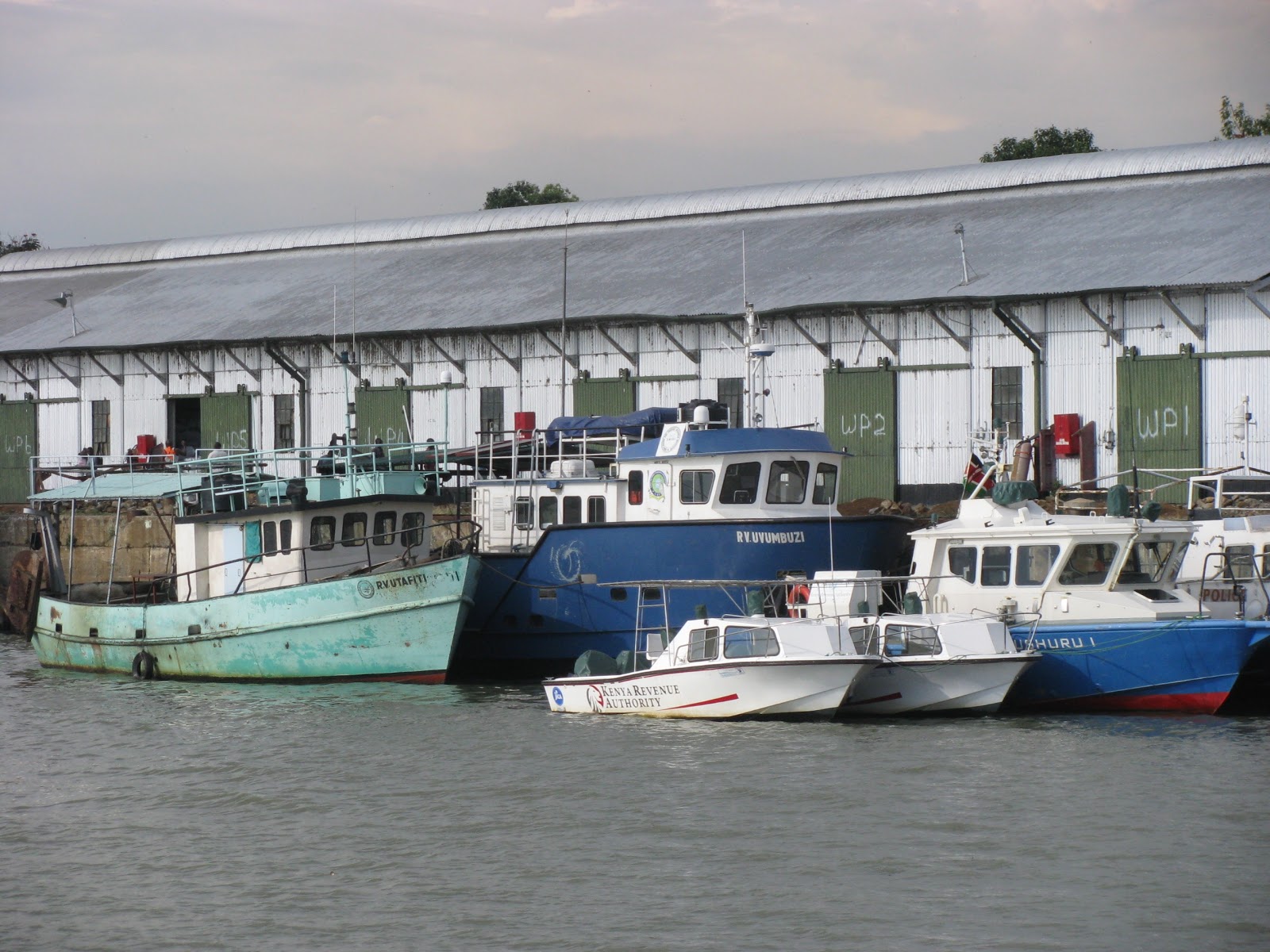
Lake Victoria is the second-largest lake in the world, in terms of surface area. In that respect, this freshwater lake is more like a Sea. The dynamics due to its dimension ensures that. It glues Uganda, Tanzania and Kenya together, in more ways than one than just geographically. Ships transporting cargo of soap, plastic and cooking oil ply from Kisumu to Mwanza-Tanzania and Jinja-Uganda. The Migingo Island in the Lake is a bone of contention between Uganda and Kenya, and often hostilities arise over its occupation and ownership. But, for the local populace on its shores, the Sea spells livelihood and life, itself.


Also read: Lake Victoria - Part II (Living by the Lakeside)
http://padmaja-earthletters.blogspot.com/2011/08/living-by-lakeside.html


Wednesday, August 10, 2011

Crossing Mara Waters

A Photo Essay 

Every year after the long rains, in July, hordes of wildebeest migrate from Serengeti in Tanzania to Masai Mara in Kenya following the scent of sweet grass leaving fallow ground in their wake. These ungulates may not recognize or heed borders but they do have to acknowledge the thread of river Mara that slices their route to greener, rather "redder" pastures, as they travel in search of lush red oat grass. The migration of millions of wildebeest and along with them, zebras, has been going on for as long as man can extrapolate backwards. The epitome of this unique pilgrimage of gargantuan proportions is the river crossing.

Today, we are at Maasai Mara, for the third year in a row, to witness drama extraordinaire on Earth.


...and the nearly 200-km long Mara river is the centrestage of this epic journey.


The Mara river is an entire ecosystem in itself and is, mainly, "kiboko" territory. That is the local name for hippopotamus. Hippos wallow in the water for large part of the day and come out to feed on grass at dusk, for which they travel miles.  Hippopotami are the most dangerous of all animals having caused maximum deaths in man-animal conflict in Kenya!


The Nile crocodile is the other resident of Mara river. It lies submerged under water difficult to detect and at other times motionless basking in the sun for all to see, like this one. Either way it instills fear in the hearts of the game that come down to drink water. Crocodiles - at times six feet long - ambush animals that visit riverbanks.


A marabou stork (right) and a white-backed vulture hang around the river to scavenge on dead animals killed by crocodiles or those that drown during the river crossing. The prospect of easy meal has them reside here temporarily.


After two days of 'game driving' at Mara, finally we see wildebeest (and zebras) gather on either flanks of the river, their anxiety matching ours. Will they or won't they... (cross the river)?


Having reserved vantage viewpoints the audience is waiting, expectantly. The only thing that rivals the coming together of the wildebeest during migration time is, perhaps, the migration of tourists from all corners of the world! To be honest, the tourist influx, off late, has become intrusive. Errant tourists in the larger park premises (as against the conservation zone where we were) bend rules and get into no-go zones, unscrupulously willing to pay 'hefty' fines of  $100, at times, even interfering with the wildebeest movement. Transgressions such as these need to be curtailed assiduously. The only way to do that is to limit the number of lodges within the park and hike the park fees (they are already steep) and fines to 'obscene' levels.


Over million years, wildebeest have been migrating over the endless plains of Serengeti into Mara by bridging the river and there are some 10-15 fjords at which the herds prefer to jump and swim across. The assembling of the herds at a ford is by no means a guarantee that they will cross there. By some telepathic communication the herds wait for the opportune time, sometimes, inordinately, and there is great suspense in the air. The driver-guides, on their part, communicate with each other to tag the coordinates of the gnus. With  years of experience of having 'read' and 'analysed' the behaviour of gnus, they criss-cross the tourist lanes even as the gnus lead tourists on a 'wild-beast' chase!


The gnus led us up the garden path several times and after a fair deal of back and forth we get to this arena where action seems imminent. The suspense is building by every passing moment.


Kicking up dust for the scramble to the river


Zebras accompany the herds of gnus and often pave the way for river crossing


We waited with bated breaths as the zebras came close to the water's edge only to buck back nervously afraid of dangers lurking beneath. Much braying and scuttling is taking place by the edge and after nearly 15 minutes it looks like the zebras are not going to muster enough courage, after all, to take that plunge, today.


Before they decide to wade through the water, the zebras  lick the water or taste it for signs of danger in  form of predators. Perhaps, this lot senses the presence of a Nile crocodile and is, therefore, hesitant to take the next step.


While the zebras deliberate endlessly, the wildebeest that are huddled on top finally descend towards the riverbank...


...and the first one takes the plunge without much ado. Like our driver-guide says: "the gnus are stupid, they will jump without thinking..." But perhaps that 'stupidity' is what is needed to get the juggernaut rolling.


The zebras are still debating...


Meanwhile, the first batch of the gnus have already swum across without a mishap...


...and finally the zebras take heart and follow in the wake of the wildebeest.


and how!


and the crossing is underway full swing...


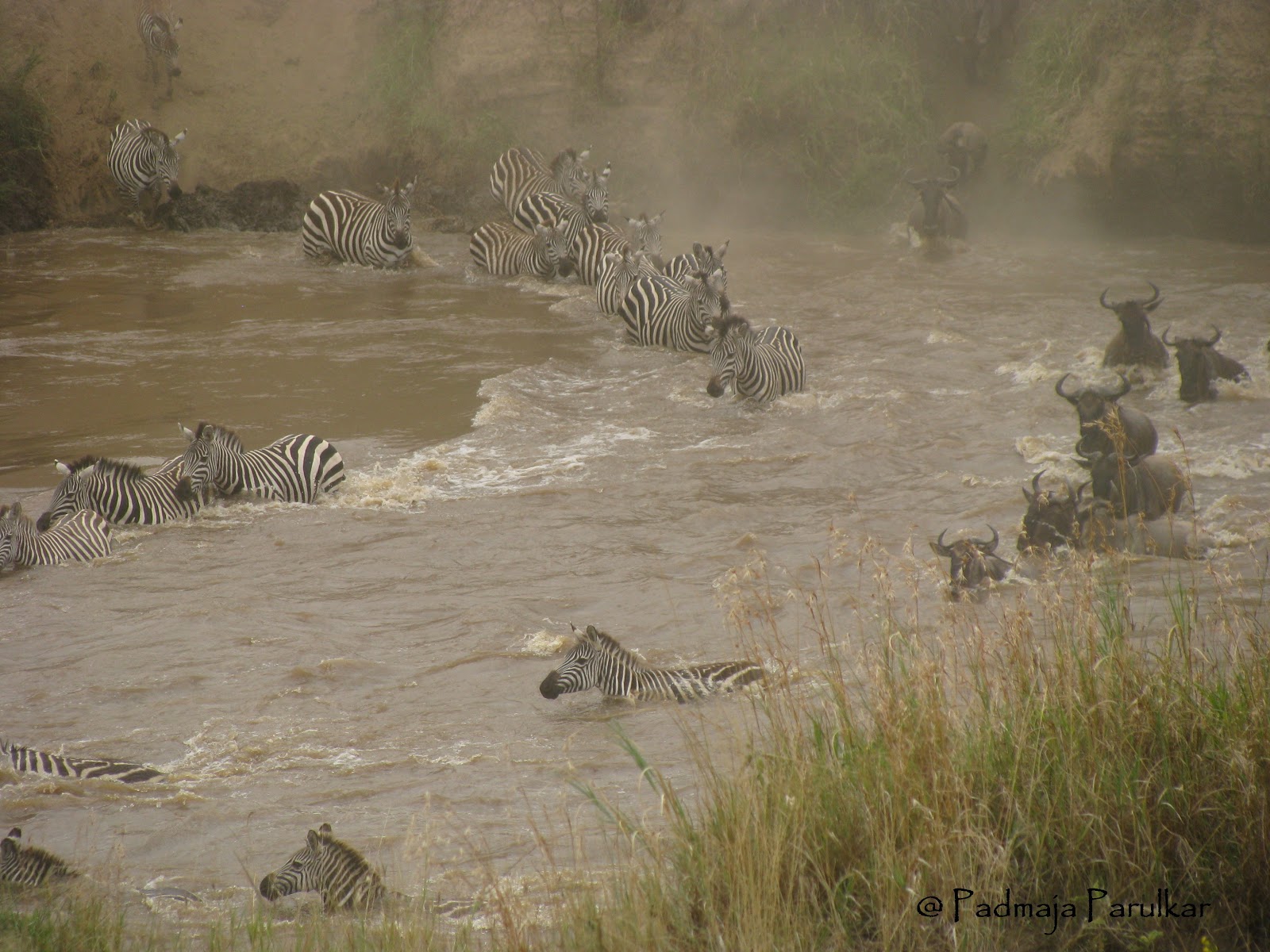
As more and more wildebeest and zebras jump into the river, hurriedly, eddies of dust swirl about hazing the landscape. 


Finally, after an hour-long drama, the gnus and the zebras have managed to cross the river without falling prey to crocodiles' snares or hippos threatening tactics.


Elsewhere, earlier, we saw this sight of a zebra crossing boldly right in front of a gigantic Nile crocodile... the crocodile had indulged in gluttony and could not be bothered for the moment. As it is, crocs feed once a week and can live on their fat for a long period. 


This is a sight at another river crossing site. Carcasses of wildebeest lay strewn as marabou storks and vultures (Ruppell's griffon, Lappet-faced, White-backed, and White-hooded)  tugged at them, mercilessly. The stench and the sight were revolting but these uncouth scavengers deserve kudos for they are also the "shudras" (cleaners) of  river Mara. 

All in all, we were witness to a "clean" river crossing without the attendant macabre action and we were happy to have been spared the gruesome details. No crocodiles bringing down gnus and no other land predators like hyenas and lions waiting on the river banks like Yamadoot or death personified.  
  

Wildebeest superherd dotting the horizon. This is how the plains of plenty - Maasai Mara - look through July - October before the gnus depart on their onward journey back to Serengeti.